
Blog Details
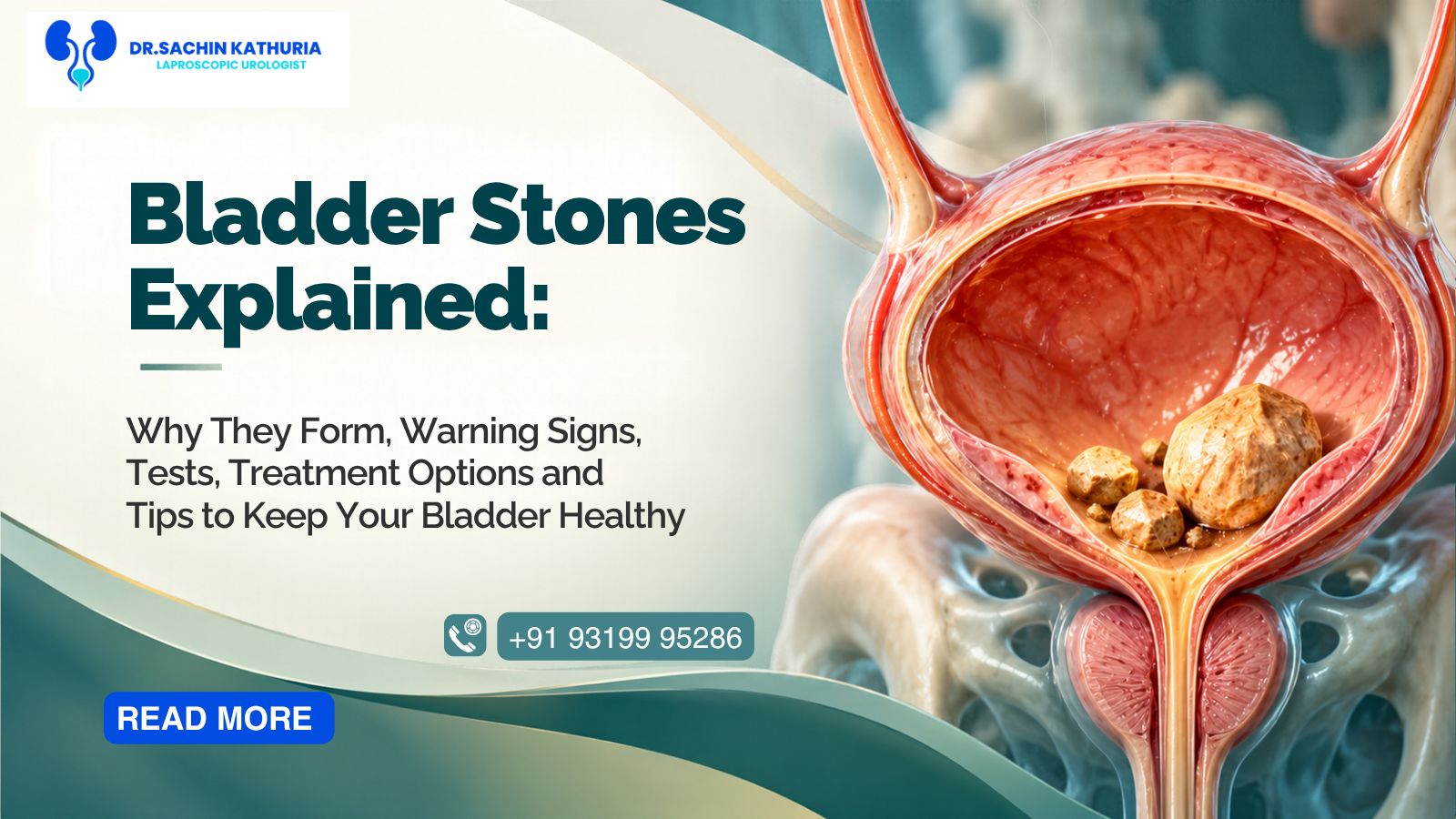
Bladder Stones Explained: Why They Form, Warning Signs, Tests, Treatment Options and Tips to Keep Your Bladder Healthy
Pain in the lower abdomen, a weak or stop-and-start urine flow, and a constant feeling that the bladder is not empty can all be signs of bladder stones. They are less talked about than kidney stones, but they can cause real discomfort and repeated infections. According to the Best Bladder Specialist in Old Rajinder Nagar, finding why the stone formed is as important as removing it.
What Are Bladder Stones?
Bladder stones are hard lumps of minerals that form inside the bladder. They usually develop when urine stays in the bladder for too long, allowing minerals to crystallise. Some stones are tiny, while others grow large.
The Best Bladder Specialist in Old Rajinder Nagar explains that bladder stones are often a sign of an underlying problem with bladder emptying.
Common Causes
Incomplete emptying of the bladder
Enlarged prostate in men
Narrowing in the urinary passage
Repeated urinary infections
Nerve problems affecting the bladder
Long-term use of a urinary catheter
Low water intake
Stones that move down from the kidney
Symptoms to Watch For
Pain or discomfort in the lower abdomen
Frequent need to pass urine
Pain or burning while passing urine
Weak, interrupted, or stop-start urine flow
Cloudy or dark urine
Repeated urinary infections
How Are Bladder Stones Diagnosed?
Urine tests to look for infection or blood
Ultrasound of the abdomen
X-ray or CT scan to see the size and number of stones
Cystoscopy, a thin camera test to view the inside of the bladder
Treatment Options
Medicines and fluids for very small stones, though most bladder stones do not pass on their own
Endoscopic removal: a thin scope passes through the natural urinary passage, and the stones are broken with laser or ultrasound and removed, without any cuts
Open or keyhole surgery for very large stones
Treating the underlying cause, such as prostate enlargement or infection, to prevent new stones
The Best Bladder Specialist in old Rajinder Nagar emphasizes that removing the stone without treating its cause can lead to recurrence.
Recovery
Mild burning and light blood in urine for a few days
A temporary urinary catheter in some patients
Plenty of fluids and prescribed medicines
Follow-up visit to check bladder emptying
How to Prevent Bladder Stones
Drink enough water throughout the day
Do not hold urine for long periods
Treat urinary infections promptly
Get prostate or bladder emptying problems evaluated
Keep follow-up appointments if you use a catheter
When to See a Urologist
Pain, burning, or blood in urine
Difficulty passing urine or a weak stream
Repeated infections
Sudden inability to pass urine, which needs urgent care
Conclusion
Bladder stones are treatable, and early care prevents infections and bladder damage. Consult Dr. Sachin Kathuria at Sir Ganga Ram Hospital, Old Rajinder Nagar, New Delhi, or call +91 93199 95286. Choosing the Best Bladder Specialist in Old Rajinder Nagar helps you get the stone removed and its cause treated.
FAQs
Can bladder stones pass on their own?
Small ones sometimes do, but most need treatment.Is removal done with cuts?
Often not. Endoscopic methods use natural passages.Are bladder stones the same as kidney stones?
No. They form in different parts, though kidney stones can travel to the bladder.Can they come back?
Yes, if the underlying cause is not treated.When should I see a doctor?
For pain, blood in the urine, a weak stream, or repeated infections.
