
Blog Details
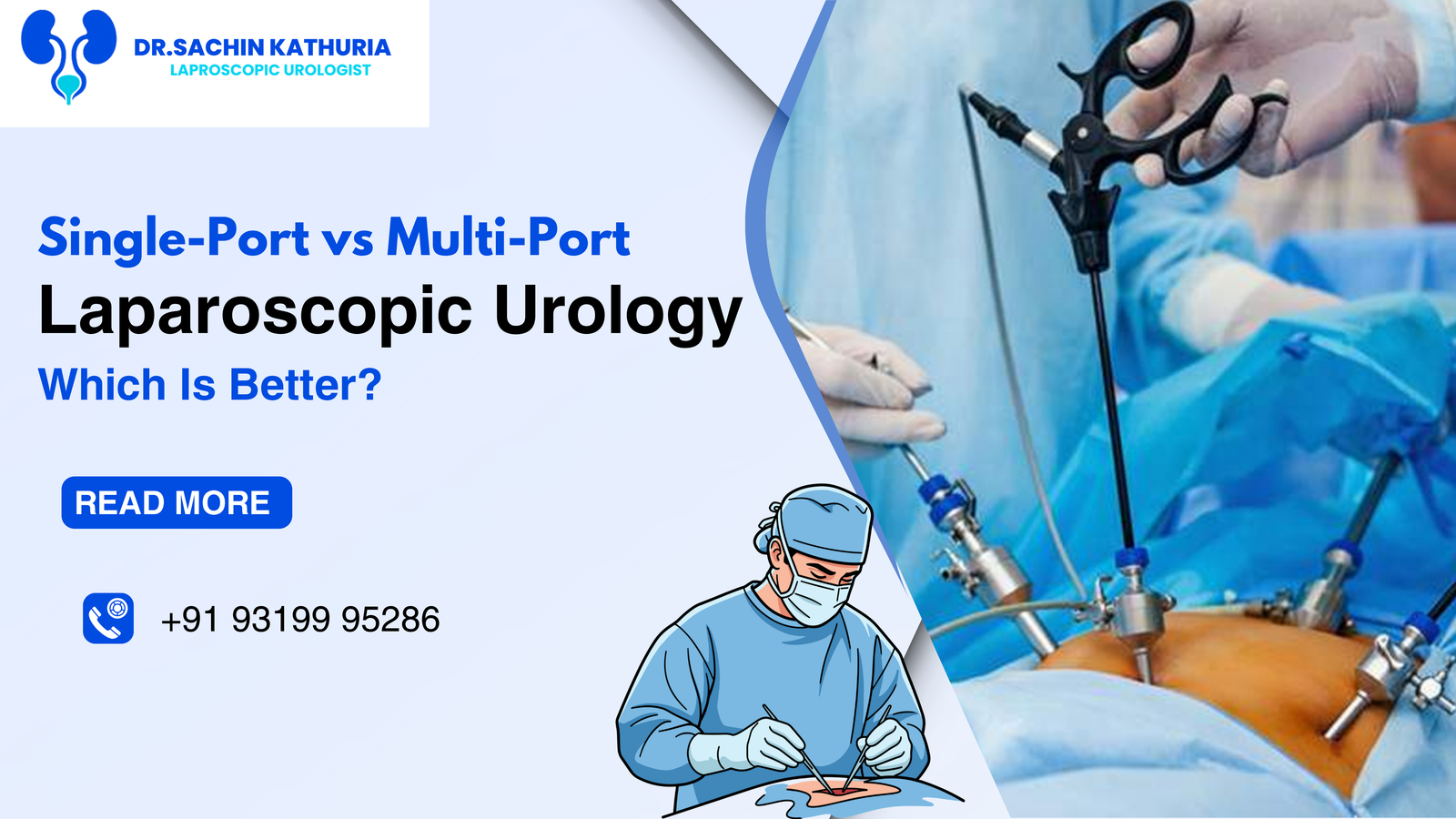
Single-Port vs Multi-Port Laparoscopic Urology: Which Is Better?
Laparoscopic surgery has transformed modern urology by offering safer procedures, smaller incisions, and quicker recovery. Today, patients often hear about single-port and multi-port laparoscopic urology and wonder which one is better. The answer isn’t always straightforward—it depends on the condition, complexity, and patient factors.
Let’s break it down in simple terms.
What Is Laparoscopic Urology?
Laparoscopic urology is a minimally invasive surgical technique where procedures are performed using a camera and fine instruments inserted through small incisions. It is commonly used for kidney, prostate, ureter, and adrenal surgeries.
Patients choosing care from an experienced specialist, such as the Best Urologist in Rajnider Nagar, often benefit from personalized surgical planning based on these techniques.
What Is Single-Port Laparoscopic Surgery?
Single-port laparoscopic surgery uses one small incision, usually through the belly button. All instruments and the camera are passed through this single entry point.
Advantages of Single-Port Surgery
Minimal visible scarring
Less post-operative pain
Faster cosmetic recovery
Shorter hospital stay in selected cases
Limitations
Technically more challenging
Not suitable for complex or advanced cases
Limited instrument movement
Single-port surgery is typically recommended for selected patients and simpler procedures, where safety and precision can still be maintained.
What Is Multi-Port Laparoscopic Surgery?
Multi-port laparoscopic surgery involves 3 to 5 small incisions, each allowing separate instruments to enter the body. This provides better flexibility and control during surgery.
Advantages of Multi-Port Surgery
Better visibility and precision
Suitable for complex and advanced urological conditions
Lower surgical difficulty for intricate procedures
Widely practiced and proven technique
Limitations
Slightly more scars (though still very small)
Marginally higher post-operative discomfort compared to the single-port
Many surgeons prefer multi-port laparoscopy for complex kidney or prostate surgeries due to its safety and adaptability. Consulting the Best Urologist in Rajnider Nagar helps determine whether this approach is more appropriate.
Single-Port vs Multi-Port: Key Differences
Aspect | Single-Port | Multi-Port |
Number of Incisions | One | Multiple small incisions |
Cosmetic Outcome | Excellent | Very good |
Surgical Flexibility | Limited | High |
Complexity Handled | Low to moderate | Moderate to high |
Surgeon Skill Requirement | Very high | Standard laparoscopic expertise |
Which One Is Better for You?
There is no “one-size-fits-all” answer. The best choice depends on:
Type of urological condition
Complexity of surgery
Patient anatomy and medical history
Surgeon’s expertise
For some patients, single-port surgery offers faster recovery and cosmetic benefits. For others, multi-port laparoscopy ensures better safety and precision. An experienced specialist—such as the Best Urologist in Rajnider Nagar—will recommend the option that prioritizes long-term outcomes over trends.
Final Thoughts
Both single-port and multi-port laparoscopic urology are safe and effective when performed by skilled hands. The real success lies not in the number of ports but in choosing the right approach for the right patient. Trust, experience, and clear communication with your surgeon play the biggest role in achieving the best results.
If you’re seeking guidance from the Best Urologist in Rajnider Nagar, a detailed evaluation can help you move forward confidently.
FAQs
1. Is single-port surgery always better?
No, it depends on the condition and surgical complexity.
2. Does multi-port surgery cause more pain?
Pain difference is minimal and well-controlled.
3. Which surgery has a faster recovery?
Single-port may offer slightly faster cosmetic recovery.
4. Are both procedures safe?
Yes, when performed by an experienced urologist.
5. How do I choose the right option?
Consult an expert urologist for personalized advice.
